
What feels like clarity today was once just a young girl's quiet attempts to understand her surroundings and the feelings she had no words for.

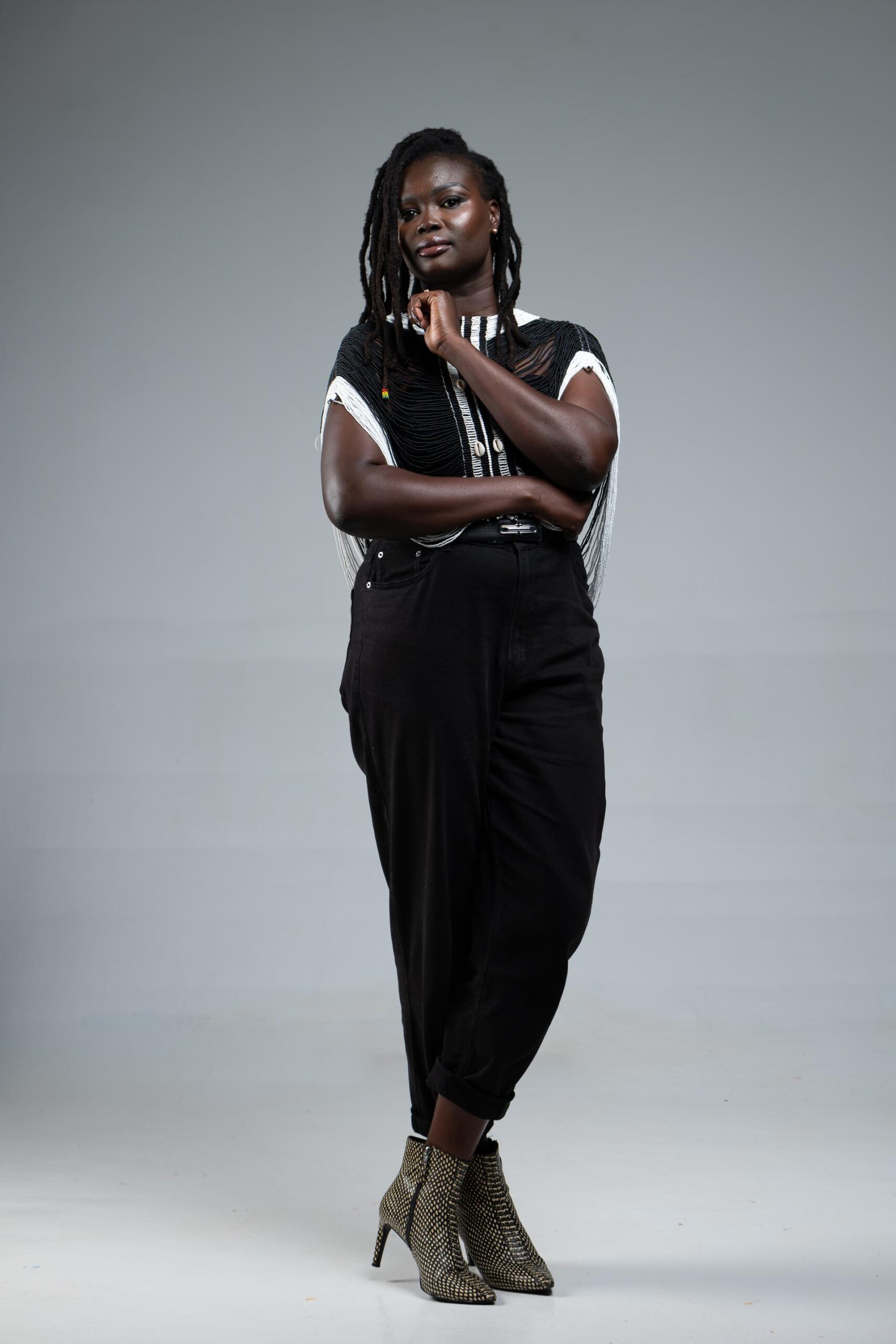
I am a development economist and pan-African feminist peacebuilder whose work moves across community, institutional, and global policy spaces. I organize, write, and engage institutions to explore how power, resources, and political systems shape everyday life in conflict-affected contexts, and how feminist organizing and collective leadership can open pathways toward more just and sustainable futures.
The Roots of my Work
My feminist consciousness was shaped early by the women I grew up around. My mother was part of the Katiba Banat, a small group of teenage girls and young women who joined the Sudan People’s Liberation Army/Movement (SPLA/M) during the liberation struggle that led to South Sudan’s independence. As I grew older, I came to understand the courage it took to make choices that disrupted social expectations and to endure the stigma that came with stepping beyond what was considered acceptable for girls.
I was raised within the extended sisterhood my mother shared with other women who lived through war and displacement, holding families and communities together during the most challenging times. Their bond was so strong that, as a child, I thought they were my biological aunts. Their friendships were built on mutual care, humor, and resilience, and they became my earliest teachers of collective strength and solidarity. On the other hand, witnessing the emotional, relational, psychological, and financial strains inside a polygamous household exposed me to the layered ways patriarchal power shapes women’s lives and choices. These experiences stayed with me as unresolved questions that I later understood to be about dignity, justice, and the meaning of freedom for women.
My work is rooted in those early observations, shaped by the courage, sacrifices, and labor of the women and girls who contributed so much to our independence, and by the unfinished struggles that South Sudanese women and girls continue to face in daily life. Today, as a mother of three daughters, those questions feel both personal and urgent. I am my mother’s daughter, carrying forward her courage while finding my own way to contribute to a more just future.
Organizing, Economic Justice, and Feminist Community
Much of my work has focused on supporting girls, young women, and grassroots women leaders as they navigate conflict, displacement, and economic uncertainty. I am particularly interested in how women build collective strategies for survival and autonomy, and how community-based economies can become spaces of dignity, political voice, and social change.
In 2020, I co-envisaged Ma’Mara Sakit Village (the Village), a women-led social enterprise and feminist community initiative rooted in South Sudan. The Village grew out of years of working within formal NGO structures, including co-founding Crown the Woman, and a deepening understanding that the kind of change I was seeking could not be achieved through short-term, project-driven approaches. It was imagined instead as a long-term organizing home, a political and relational space where girls and women build solidarity, strengthen leadership, and cultivate community-based economic and cultural practices that nurture long-term collective power. No matter where my work takes me in the world, the Village keeps me grounded in the radical imagination of a more just future.
Leadership Across Global Systems of Peace and Power
As my feminist peacebuilding practice deepened at home, my work gradually expanded into international peacebuilding. In 2018, I began working across different regions and organizational settings, exploring how systems of security, governance, and humanitarian response can be more accountable to the communities they serve.
Over several years within an international peacebuilding institution, I worked with security and peacekeeping training institutions to incorporate more relationship-focused approaches to mission engagement, civilian protection, and community interaction. This included supporting the development of gender-responsive and trauma-informed training practices, as well as facilitating dialogue processes that brought community leaders and security-sector actors into ongoing engagement. Through this work, I became increasingly interested in how institutional cultures change and how trust, responsibility, and human dignity can be prioritized within systems that often seem disconnected from everyday realities.
I also found deep inspiration in working with youth peacebuilders from conflict-affected regions across Africa, Asia, and Latin America. Facilitating learning and mentorship spaces with these incredible young leaders reinforced my belief that sustainable peace is shaped not only by policy frameworks but also by relationships, imagination, and collective courage.
In recent years, my global engagement has increasingly focused on feminist resourcing and the broader questions of how movements for peace, justice, and gender equality are sustained over time. Building on my experience working within peace and security institutions, I have become more deeply involved in governance, advisory, and strategic spaces that aim to guide international funding ecosystems toward locally led, feminist-informed approaches to crisis response and long-term social change. A growing focus in my work is engaging not only with how feminism and peacebuilding are practiced but also with how they are resourced, legitimized, and prioritized within global systems of power.
Alongside this institutional and movement-level engagement, feminist knowledge production and narrative work remain central to how I make sense of these evolving spaces. Through feminist analysis and public dialogue, I continue to challenge narratives that reduce women and girls, especially in conflict-affected settings, to stories of vulnerability alone, but also draw attention to their leadership, political agency, and the ways they continue to shape collective futures.
Why this Space
Lately, balancing organizing, paid work, reproductive labor, and daily life has made it hard to keep a steady writing habit. This space is my effort to get back into that discipline, to think out loud, document changing ideas, and stay connected with the questions that continue to shape my life and work.
I write especially with young South Sudanese feminists in mind. Girls and young women who are questioning inherited systems, building new forms of leadership, and creating different possibilities for our country and the world. When I first encountered feminist thought and activism, I often longed for spaces where such reflections felt visible and accessible. This website is one way of contributing to that relatable collective intellectual and political community. The writing here also engages wider audiences interested in gender, culture, political life, and feminist futures in South Sudan and beyond. It is both a personal archive of thought and an invitation to think alongside others.